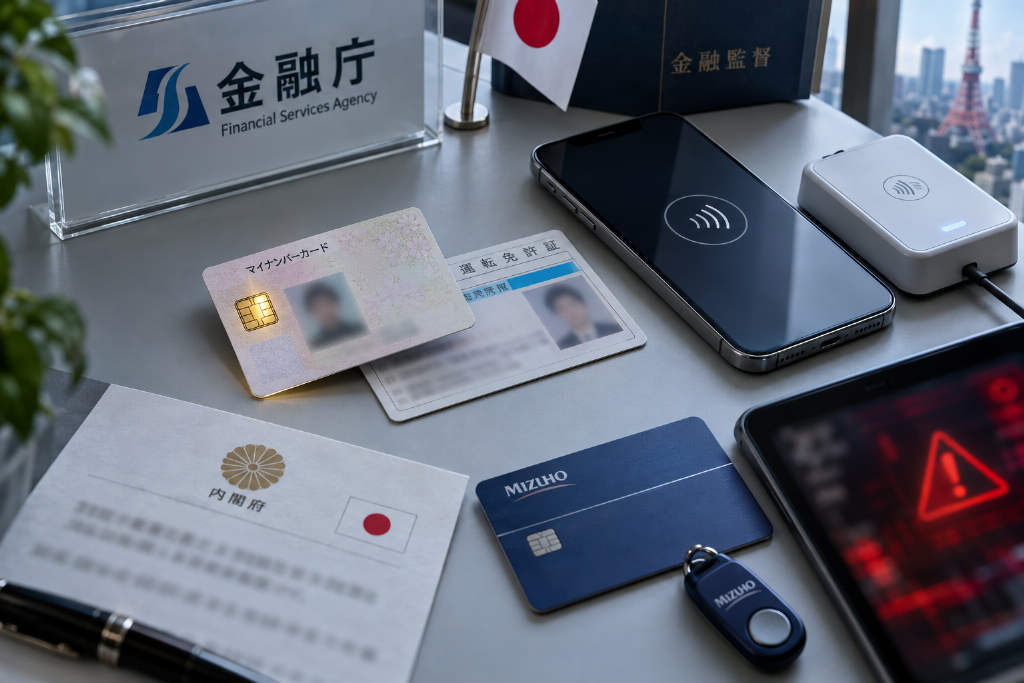
Japan FSA2026-10-09 11:13:54Japan FSA urges financial firms to stop photo-ID KYC early and move to IC chip verificationJapan’s Financial Services Agency on Oct. 9 told financial institutions to move faster on replacing photo-based remote identity checks with IC chip reading, rather than waiting for the formal rule change set for April 1, 2027. The warning followed a string of recent cyber incidents in which images of driver’s licenses and other identity documents were leaked together with customer data. Under revised rules tied to the Act on Prevention of Transfer of Criminal Proceeds, accepting images of identity documents for verification will be abolished from that date, with IC chip-based verification becoming the standard in principle. The FSA said reading IC chip data is “extremely effective” in preventing illicit activity, while leaving the exact transition timing to each firm. Until the switch is completed, institutions were told to re-check document images and customer face photos for unnatural signs, as impersonation methods have become more sophisticated. The notice also called for a review of cybersecurity controls, including third-party risk management and incident response, with reference to an alert issued the same day by Japan’s National center for cybersecurity coordination under the Cabinet Secretariat. Japanese media cited recent data leaks involving Times Car and Nippon Rent-A-Car, while CoinPost noted that crypto asset exchange service providers are also covered by the framework.30
Japan FSA2026-10-09 03:13:56Japan’s FSA urges financial institutions to switch early to IC chip-based identity checksJapan’s Financial Services Agency said on Oct. 9 that financial institutions should tighten cybersecurity controls and enforce stricter standards for remote identity verification. The agency urged covered entities not to wait until the planned April 1, 2027 abolition of ID image transmission methods takes effect, and instead move as soon as possible to verification methods that read information directly from IC chips embedded in identity documents. The warning was issued against a backdrop of ongoing unauthorized access incidents affecting customer-facing internet services and business systems. The FSA also said the requirement applies to cryptocurrency exchanges because they are classified as “financial institutions, etc.” under its cybersecurity guidelines. Another factor behind the push is the online leakage of identity document images, including driver’s licenses, according to the agency.20